

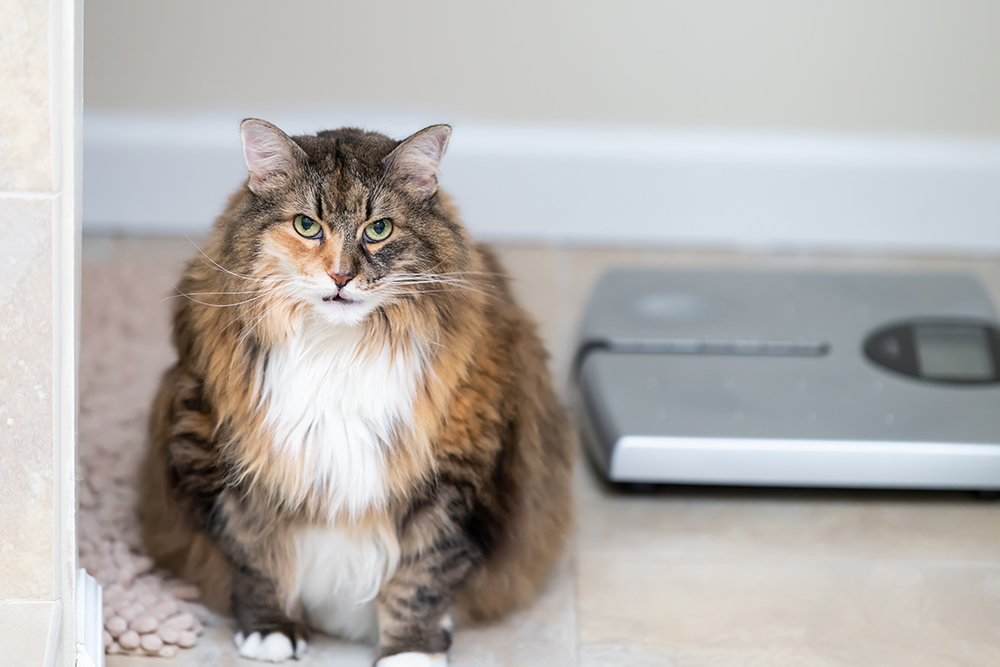
The reliable way to tell whether your dog or cat is overweight or simply fluffy is a hands-on assessment called body condition scoring (BCS), not a glance and not the number on the scale alone. Body condition scoring uses a nine-point scale tied to specific physical landmarks: how easily the ribs can be felt, whether there is a visible waist tuck, and the fat coverage over the hips and spine. A score of four or five is ideal; pets scoring six or above are carrying excess weight that puts real load on joints and affects organ function over time, while pets below four may have a nutritional gap worth addressing. The BCS gives you a consistent, objective way to track changes that are otherwise easy to miss because they happen gradually.
At Krichel Animal Hospital in Keokuk, weight and nutrition are part of every wellness conversation we have, because what your pet weighs today directly shapes how they feel years from now. Our veterinary services include nutritional counseling and thorough annual exams where we assess body condition and build a realistic feeding plan with you. When you are ready to get a clear picture of where your pet stands, get in touch with our team and we will take it from there together.
Body Condition Scoring at a Glance
- It is a 9-point scale tied to landmarks: ideal is 4 or 5, while scores of 6 or above mean excess weight.
- The scale number alone misses body composition: two pets the same weight can have very different body conditions.
- Excess weight is costly: it contributes to joint disease, diabetes, urinary stones, heart strain, and a shorter life.
- Most weight problems are reversible: a careful feeding plan, treat discipline, and regular rechecks track progress.
Why Does Body Condition Matter More Than the Scale?
Body condition matters more than the scale because the scale tells you mass, not composition, and the same weight can mean very different things. A 70-pound Labrador can be lean and athletic or carrying significant excess, and a 12-pound cat can be ideal or genuinely obese. Body condition scoring gives you and your veterinarian a shared, repeatable way to describe what you are actually looking at.
The reason this matters is that excess weight contributes to a long list of serious conditions, and lean pets live longer. Research has consistently shown that pets kept at ideal body condition outlive their overweight counterparts by meaningful years. The conditions excess weight contributes to include:
- Diabetes mellitus, especially in cats
- Joint disease and accelerated arthritis from years of extra mechanical load
- Intervertebral disc disease in long-backed breeds
- Urinary stones and lower urinary tract disease
- Systemic hypertension
- Heart disease and reduced cardiac function
- Increased anesthetic risk for any surgical procedure
- Reduced heat tolerance that worsens heat stroke risk
- Higher rates of certain cancers
The relationship runs both directions. Lean pets are less likely to develop these problems, recover better from illness, and tolerate routine procedures more comfortably.
How Does Body Condition Scoring Work?
Body condition scoring works by matching your pet to a nine-point scale that runs from 1, emaciated, to 9, severely obese, with 4 to 5 ideal for most dogs and cats. Each point corresponds to specific, checkable physical landmarks rather than a subjective impression.
| Score | What you feel and see | Category |
| 1 to 3 | Ribs, spine, and hips visible; minimal fat | Underweight |
| 4 to 5 | Ribs felt with light pressure; visible waist; belly tucks up | Ideal |
| 6 to 7 | Ribs felt only with firm pressure; little or no waist | Overweight |
| 8 to 9 | Ribs hard to feel; no waist; fat over the lower back | Obese |
Muscle condition matters alongside body fat. An overweight pet who has also lost muscle has a different problem than one with normal muscle and excess fat, and the treatment differs.
How Do You Check Body Condition at Home?
You can do a meaningful at-home check in under a minute using three views:
- From above: stand over your pet and look at the outline, where you should see a waist behind the ribs rather than a straight or barrel-shaped line.
- From the side: the belly should tuck up behind the rib cage, not hang in a horizontal line with the chest.
- By touch: press gently along the ribs, where you should feel them easily under a thin layer of fat, similar to feeling the back of your hand.
Check monthly, especially for pets with fluffy coats that hide body changes, and take photos in consistent lighting from the same angles for an objective record.
Why Does a Fluffy Coat Hide Fat?
A coat hides body condition because fur adds the same visual bulk whether a pet is lean or heavy, so the eye alone cannot judge it. Double-coated breeds like Huskies, Golden Retrievers, Maine Coons, and Persians, along with any long-haired pet, can look identical at ideal weight or 20 percent over, which is exactly why the hands-on part of the assessment matters most for them.
Some practical rules cut through the fluff:
- If you cannot easily feel ribs, your pet is probably overweight.
- If the waist is not visible from above, or you cannot feel where the body narrows behind the ribs, your pet is probably overweight.
- If you have to press firmly to find ribs, your pet is significantly overweight.
For some breeds, including Greyhounds, Whippets, Salukis, and oriental cat breeds, ideal condition includes visible ribs and a more dramatic waist tuck that would look underweight in other breeds. Knowing your specific breed’s norms matters, and we will talk through it at exams.
What Calorie Math Do Most People Get Wrong?
The most common calorie mistake is trusting the bag’s feeding guideline, which is calibrated for an average intact adult and is often noticeably off for your specific pet. The chart cannot account for several things that swing the real number:
- Reproductive status, since neutered pets need 20 to 30 percent fewer calories
- Age, since calorie needs shift dramatically across life stages
- Activity level, where a couch pet and an active one can differ by 50 percent or more
- Health conditions
- Treats and table food arriving throughout the day
A practical approach to how much to feed starts with an actual calorie calculation, not a cup off the chart. Online tools like the calorie calculator from the Pet Nutrition Alliance give a better starting estimate, combining the body condition assessment, spay or neuter status, and weight to create a plan that works.
Hidden calories derail more plans than anything else. For a 20-pound dog needing about 600 calories a day:
- A medium dog biscuit runs about 40 calories, 7 percent of the daily total
- A tablespoon of peanut butter is about 95 calories, 16 percent of the daily total
- A single dental chew is 70 to 100 calories
- Bites of human food shared at meals are variable but often substantial
Treats should account for no more than 10 percent of daily calories, and most pets exceed that by a wide margin.
What Does an Ideal Feeding Plan Look Like?
An ideal feeding plan starts with the calorie math and then adjusts based on what your pet’s body actually does over the following weeks. The core moves are consistent across dogs and cats:
- Choose the right food for life stage, body condition, and any health conditions.
- Weigh portions instead of scooping, since owners using measuring cups tend to overestimate
- Feed scheduled meals rather than free-choice for most dogs and adult cats.
- Count treats toward the daily total, or use kibble from the day’s portion as treats.
- Reassess every 2 to 4 weeks by body condition and weight, adjusting portions in small steps.
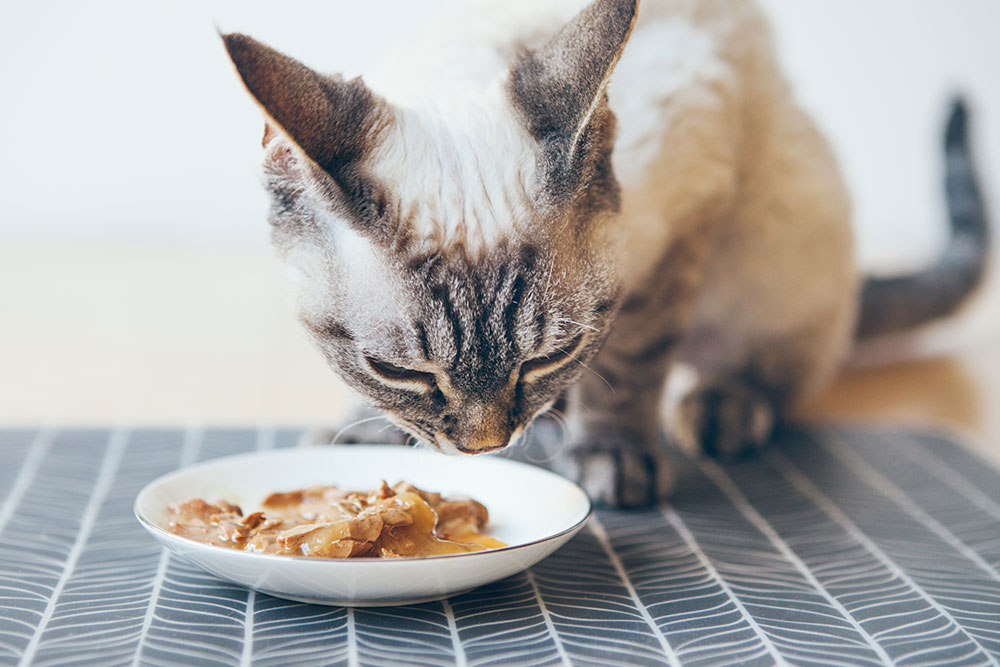
For pets needing weight loss specifically, prescription weight management diets are formulated for safe fat loss while preserving lean muscle, with protein-to-calorie ratios and controlled fiber levels that help pets feel satisfied on fewer calories. Enrichment helps too, since slow feeders and puzzle toys for dogs and food puzzles for cats stretch mealtime and curb the begging that quietly derails calorie counts.
For cats, rapid weight loss can be dangerous. Hepatic lipidosis is a life-threatening risk when weight loss happens too quickly, so cats should lose no more than 1 to 2 percent of body weight per week. That makes crash dieting in cats genuinely dangerous, and overweight cats need a deliberate, slow plan with veterinary monitoring.
When Should You Rule Out Medical Causes?
Rule out a medical cause whenever weight changes despite a steady feeding plan, or comes with other signs like lethargy, increased thirst, or appetite shifts. Before assuming weight is purely about feeding, it is worth checking for:
- Hypothyroidism in dogs, which causes weight gain and lethargy
- Cushing’s disease in dogs, which causes a pot-bellied look and increased thirst
- Hyperthyroidism in cats, which causes weight loss despite a big appetite
- Chronic kidney disease in cats, which causes weight loss with increased thirst and urination
- Pain or dental disease that affects appetite or activity
If you’ve noticed weight changes in your pet, it’s worth having a checkup to ensure there is no medical cause before starting a diet and exercise program. Our in-house diagnostics can handle the testing needed to make sure your pet is healthy, and our team will provide advice on weight loss and diets for your individual pet.
Frequently Asked Questions About Pet Body Condition
How Quickly Should My Overweight Pet Lose Weight?
Slow is the goal. Dogs and cats should lose no more than 1 to 2 percent of body weight per week. A 12-pound cat aiming for 10 pounds should expect that to take three to six months, not weeks. Faster loss in cats specifically can trigger hepatic lipidosis, a serious liver condition.
Can I Measure With Cups Instead of Weighing Food?
Cups are workable, but weighing is more accurate. Studies show owners using cups consistently over-portion by 20 to 50 percent. A kitchen scale and measuring food in grams gives you the precision the calorie math actually requires, especially for a pet on a weight plan.
My Pet Is Overweight but Seems Happy. Does It Really Matter?
It matters more than it looks. Overweight pets often seem fine while the load on joints, heart, and metabolic systems quietly accumulates, and the cost usually shows up as years lost from lifespan rather than sudden illness. Lean pets live longer, develop fewer chronic diseases, and tolerate routine procedures better.
Are Some Breeds Harder to Keep at Ideal Body Condition?
Several are. Labradors, Beagles, Cavaliers, Pugs, Dachshunds, Cocker Spaniels, and others have higher rates of being overweight. Some have genetic differences in appetite regulation, while others reflect lifestyle patterns or owner habits. These breeds need stricter calorie discipline than average to stay at an ideal score.
Taking the First Step Toward a Healthier Weight
Better body condition means easier movement, fewer health risks, and more good years together. Saying no to begging eyes is hard, and the changes that add up to real results are not always intuitive. You do not have to figure it out alone, since the right plan for your pet’s age, activity, and household is exactly what we build at a wellness visit.
If you want help building a feeding plan that actually fits, request an appointment or reach out to us to start the conversation.




Leave A Comment