

Senior Pet Screening: How Blood Work, Thyroid Testing, and Imaging Keep Your Pet Healthy Longer
As the years pass, you may notice your older dog’s muzzle turning gray, less interest in walks, or your cat taking more naps than usual. Some of those changes are a normal part of aging, but others aren’t just “getting old.” They can be signs of treatable conditions, and they’re worth paying attention to. Preventive screening catches problems early, when treatment is simpler, less expensive, and more effective. A blood pressure check can catch hypertension before it damages the kidneys or eyes. A thyroid test can reveal an imbalance before it strains the heart. Blood work catches kidney changes before your pet is nauseous and losing weight.
So when should your pet start getting screened? Most dogs are considered seniors around age 7 (earlier for large breeds), and cats typically enter their senior years around 10 to 11. At Krichel Animal Hospital in Keokuk, IA, our AAHA-accredited team tailors screening to your pet’s age, breed, history, and lifestyle. If your pet is entering their senior years, request an appointment to talk about what testing makes sense.
Why Aren’t Routine Exams Enough for Aging Pets?
Senior pets change quickly. Organs slow down, metabolism shifts, and the immune system weakens. Many serious conditions stay completely silent until significant damage has occurred. That’s why twice-yearly exams with targeted preventive testing help us find small shifts before they become big problems.
Six months is a long time in a senior pet’s life, and waiting a full year can allow treatable conditions to advance. Testing adds objective data that a physical exam alone can’t provide. Even “normal” values tell a story: if a kidney marker is gradually trending upward across visits, that pattern signals early disease even though each result still looks fine.
What Does a Comprehensive Senior Screening Include?
We combine our knowledge of your pet’s age, health record, and breed risk factors to choose the best tests. Depending on your pet’s needs, we may recommend blood work, blood pressure checks, thyroid testing, urinalysis, and imaging, guided by trusted senior pet care recommendations.
At Krichel Animal Hospital, we follow AAHA standards and use in-house diagnostics for same-day results. Our team builds proactive screening into routine wellness and diagnostic services so your pet’s care plan stays clear and consistent. Contact us and we’ll help build the right plan.
What Does Blood Work Reveal in Senior Pets?
Blood panels offer a snapshot of how your pet’s body is functioning on the inside, often before any symptoms appear. We may recommend one or all of the following tests:
| Test | What It Measures | What It Can Detect |
| Complete Blood Count (CBC) | Red cells, white cells, platelets | Anemia, infection, clotting issues, some cancers |
| Chemistry Panel | Liver enzymes, kidney values, proteins, blood glucose, electrolytes | Liver and kidney disease, dehydration, diabetes, metabolic disorders |
| Heartworm and Tick-borne Diseases | Markers signaling the presence of parasites | Heartworm disease, Lyme disease, Anaplasma, Ehrlichia |
| Thyroid (T4) | Thyroid hormone levels | Hypothyroidism, Hyperthyroidism |
Common findings in seniors include mild anemia, rising kidney values, elevated liver enzymes, and increased blood sugar. We compare new results with prior baselines using our in-house lab, which means same-day results and same-visit conversations about what they mean. A slow upward drift in a value can signal early disease even when individual numbers still fall within “normal” range, which is why tracking trends matters.
Why Does Blood Pressure Matter for Senior Pets?
Hypertension (high blood pressure) can be silently damaging. Some pets go suddenly blind from retinal detachment. Others develop kidney decline or neurologic changes without any warning signs beforehand.
Conditions commonly linked to high blood pressure: chronic kidney disease, hyperthyroidism in cats, diabetes, and Cushing’s disease.
Organs at risk from uncontrolled hypertension: eyes (retinal detachment, sudden blindness), kidneys (accelerated damage), heart (increased workload), and brain (neurologic changes, stroke-like episodes).
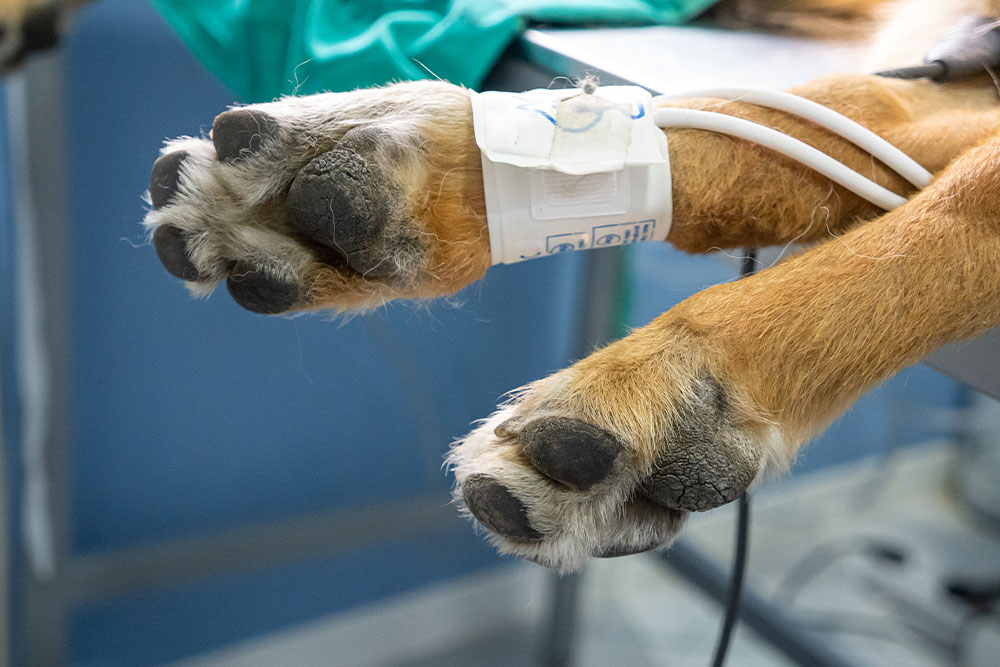
Blood pressure checks are quick and noninvasive, using a small cuff on the leg or tail, similar to how it works at your own doctor’s office. We repeat readings for accuracy and interpret them alongside lab work. Managing hypertension usually combines medication with treatment of any underlying disease.
What Can a Urine Test Tell Us?
Urinalysis is one of the simplest and most informative screening tools available. It checks urine concentration, protein, glucose, blood cells, crystals, and bacteria, giving us a window into kidney function, urinary infections, diabetes, and bladder health.
Healthy kidneys produce concentrated urine. When urine becomes consistently dilute or shows protein, it can signal kidney disease, one of the most common conditions in senior pets, especially cats. Combining urinalysis with blood work gives a fuller picture than either test alone, because some kidney changes show up in urine before blood values shift. We use clean collection methods for accurate results, and the test itself is quick and painless.
How Do We Screen for Heart Disease?
Many pets with early heart disease look perfectly healthy on the outside, which is why screening matters. On exam, we may hear murmurs or irregular rhythms that prompt further testing. Early heart disease diagnosis improves comfort and longevity, giving us time to start treatment before symptoms develop.
| Test | What It Shows | When It’s Used |
| Chest X-rays | Heart size, lung health | Screening, coughing, exercise intolerance |
| Echocardiogram | Heart structure, valve function, blood flow | Murmurs, suspected heart disease |
| NT-proBNP testing | Heart stress biomarker in blood | Screening before symptoms appear |
| ECG/EKG | Heart rhythm | Irregular heartbeat, arrhythmias |
These tests are noninvasive and well-tolerated. Chest X-rays are included in our senior wellness packages, and additional cardiac testing is recommended when exam findings or symptoms suggest the heart needs a closer look.
When Are X-Rays and Ultrasound Recommended?
Radiography helps evaluate the chest, abdomen, and bones. X-rays can reveal heart enlargement, lung issues, masses, bladder stones, arthritis, and fractures. We use digital radiography for high-quality images with less radiation, and results are available the same day.
When we need to see more detail inside an organ, ultrasound provides a real-time look at the liver, spleen, kidneys, bladder, and intestines. It detects masses, cysts, and fluid accumulation, and can guide biopsies when tissue sampling is needed. Most pets tolerate it well without sedation, and having both imaging tools under one roof means faster answers and fewer trips.
What Conditions Should Be on Your Radar?
Thyroid Disease In Dogs
Hypothyroidism means the thyroid isn’t producing enough hormone, which slows your dog’s metabolism. It commonly affects middle-aged and senior dogs, and the signs can be easy to mistake for normal aging.
Signs to watch for:
- Unexplained weight gain, lethargy, and cold intolerance
- Thinning coat or hair loss, especially on the trunk and tail
- Dry, flaky skin or recurring skin and ear infections
A simple blood test screens for hypothyroidism, and if confirmed, daily medication usually restores normal levels. Most dogs improve within weeks as energy, weight, and skin health bounce back. It’s one of those conditions where owners often say, “I didn’t realize how much my dog had slowed down until treatment brought the spark back.”
Thyroid Disease in Cats
Feline hyperthyroidism is the most common hormonal disease in older cats. The thyroid produces too much hormone, revving up metabolism and putting strain on the heart and kidneys.
Signs to watch for:
- Weight loss despite eating more than usual, sometimes with vomiting or diarrhea
- Restlessness, hyperactivity, or irritability with rapid heart rate
- Increased thirst and urination, or an unkempt coat
Treatment options include daily medication, prescription iodine-restricted diets, or radioactive iodine therapy, which is often curative. The best choice depends on your cat’s overall health and your ability to medicate. Untreated thyroid disease shortens life and reduces comfort, but with treatment and regular monitoring, most cats do very well.
Kidney Disease
Chronic kidney disease is extremely common in senior cats, but it affects dogs too. Because kidneys have significant reserve capacity, pets often don’t show symptoms until 65 to 75% of function is already lost. That’s why routine screening is so valuable: it catches changes early, when intervention is most effective and before your pet starts feeling sick.
Common signs include weight loss, vomiting, excessive thirst, dehydration, urinating outside the litter box, and lethargy. Management typically includes special diets, hydration support, and anti-nausea medications. With early detection and consistent care, many pets maintain good quality of life for months to years.
Heart Disease
Common conditions include mitral valve disease in small dogs, dilated cardiomyopathy in large dogs, and hypertrophic cardiomyopathy in cats.
Symptoms typically include lethargy, coughing, decreased appetite, difficulty breathing, and sometimes an enlarged abdomen. Early detection allows medications and lifestyle changes that reduce strain on the heart. Many pets live comfortably for months or even years after a heart disease diagnosis when they’re well-managed with regular monitoring and medication adjustments.
Cancer Screening
Routine exams, lymph node checks, and imaging help identify cancer early. Watch for new or changing lumps, unexplained weight loss, decreased appetite, or persistent coughing. When a suspicious mass is found, a fine needle sample or biopsy determines whether it’s benign or malignant, guiding next steps.
Some breeds carry higher risk for specific cancers. Golden Retrievers, German Shepherds, Boxers, and giant breed dogs are more prone to conditions like lymphoma, hemangiosarcoma, and osteosarcoma. Regular monitoring can catch these earlier, when treatment options are broader.
Liver Disease
Blood work may reveal elevated liver enzymes before your pet shows any outward signs, and imaging helps clarify the cause. Signs of liver disease include loss of appetite, vomiting, increased thirst, jaundice (yellowing of the gums or eyes), or fluid buildup in the abdomen. Many pets respond well to dietary support, targeted medication, and regular monitoring.
Arthritis and Joint Pain
Arthritis is common in senior dogs and often overlooked in cats, who tend to hide discomfort by simply doing less rather than limping. Exams and X-rays confirm joint changes and help us start relief early. A combination of anti-inflammatory medication, joint supplements, weight management, and rehabilitation keeps pets moving more comfortably.
We offer modern pain management options including laser therapy for noninvasive pain relief, Solensia for cats, and Librela for dogs. You can also visit our online pharmacy for trusted joint supplement options to support your pet’s comfort at home.
Dental Disease
Dental disease is extremely common in older pets and impacts far more than the mouth. Bacteria from infected gums can enter the bloodstream and affect the heart, liver, and kidneys, which means dental health is whole-body health.
Watch for bad breath, drooling, bleeding gums, reluctance to chew, loose teeth, or dropping food. Professional cleanings under anesthesia remove tartar above and below the gumline, and pre-anesthetic blood work helps ensure safety. At home, daily brushing and dental chews help maintain progress between cleanings.
Frequently Asked Questions
How often should my senior pet be screened?
Most seniors benefit from exams and lab work every six months. Pets with chronic conditions like kidney disease or thyroid disorders may need more frequent check-ins.
What are early signs my pet needs screening now?
Increased thirst or urination, weight changes, new lumps, coughing, stiffness, decreased appetite, or changes in litter box habits all warrant evaluation.
Is anesthesia safe for senior pets?
With pre-anesthetic blood work and tailored protocols, modern anesthesia is very safe for seniors. We use dedicated monitoring, IV fluids, and warming support throughout every procedure.
What if all the test results come back normal?
That’s great news. Normal results provide peace of mind and a valuable baseline. If values start trending upward at the next visit, we’ll catch the shift early, which is exactly the point.
How much does senior screening cost?
Costs vary based on which tests are included. We’re always happy to discuss options that fit different budgets, and wellness packages bundle essential tests at better value.
Help Your Senior Pet Thrive With Proactive Care
Catching kidney disease, thyroid problems, hypertension, arthritis, and other conditions early keeps treatment simpler and your pet more comfortable. Our AAHA-accredited team at Krichel Animal Hospital brings compassionate care, in-house diagnostics, and practical guidance to every visit.
If your pet is slowing down or you’d like to start a senior screening plan, contact us or request an appointment. We’re honored to be your veterinary partner through every stage of your pet’s life.



Leave A Comment