

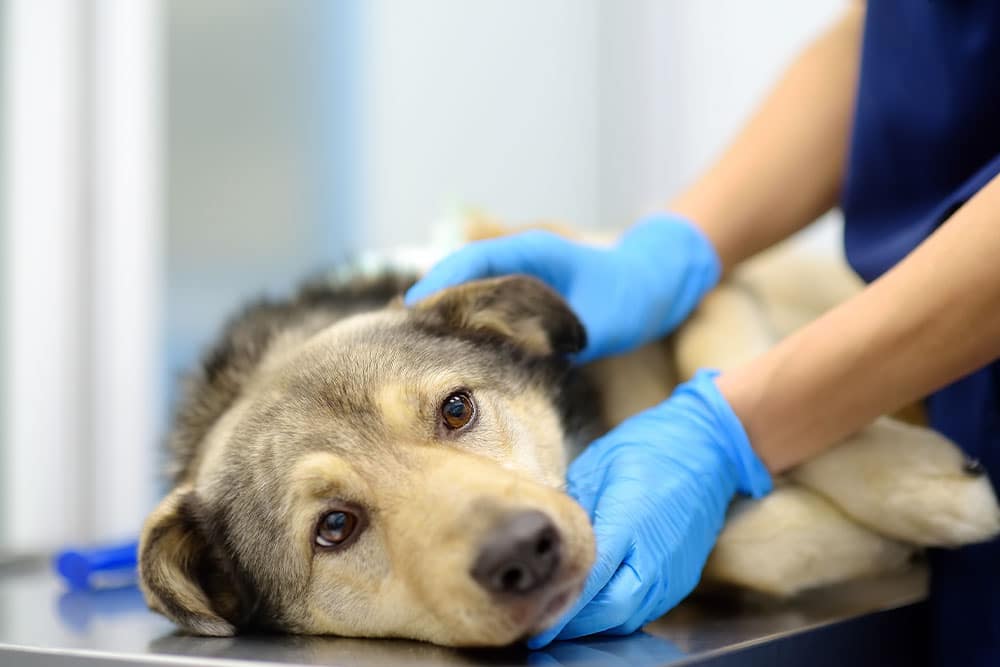
You know your pet better than anyone, so when something feels different, you notice. Maybe it’s a lump under the jaw you don’t remember being there, or a swelling in front of the shoulder that appeared seemingly overnight. These lumps are often lymph nodes, and when they’re enlarged (a condition veterinarians call lymphadenopathy), they’re telling us that your pet’s immune system is reacting to something. That “something” could be a nearby infection, an allergic response, or in some cases, cancer.
As an AAHA-accredited hospital, Krichel Animal Hospital has the diagnostic tools to investigate enlarged lymph nodes and find out what’s behind them. We take a step-by-step approach: careful exam first, then targeted testing, then a clear conversation about what we’ve found and what your options are. If you’ve felt a new lump on your pet or something just seems off, contact us or call (319) 318-6274 to schedule an evaluation.
What Lymph Nodes Do and Why They Matter
Think of lymph nodes as your pet’s immune system’s local watchtowers. These small, bean-shaped structures are distributed throughout the body, positioned to filter lymph fluid draining from surrounding tissue, capture pathogens and foreign material, and coordinate the immune response when something harmful is detected.
Where lymph nodes are located throughout a dog’s body follows a consistent pattern, and the same is largely true for cats. The ones you can feel with gentle palpation sit in fairly predictable spots: the mandibular nodes tucked beneath the jaw, the prescapular nodes just ahead of each shoulder, the axillary nodes in the armpits, the inguinal nodes in the groin, and the popliteal nodes nestled behind each knee. A lymph node locations chart shows the full picture for dogs, and cat lymph nodes follow a similar distribution.
A node that is working the way it should is typically small enough that you would not notice it under normal stroking or petting. When you can feel it, something has activated it. Working out what activated it is the clinical question that drives the entire workup.
Why Lymph Nodes Enlarge: The Main Categories
Infections and Inflammation
Infection is one of the most common reasons for lymph node swelling, and the location of the enlarged node points toward where the problem originates. A swollen mandibular node often indicates an issue in the mouth, including dental disease, oral infection, or a wound on the face. A swollen popliteal node behind the knee often traces back to a paw infection, wound, or skin problem below it.
Systemic infections affect multiple node groups simultaneously. Lyme disease from tick bites can cause generalized lymph node enlargement alongside fever and joint pain, particularly relevant in Iowa where tick populations are active through the warmer months. Leptospirosis, spread through water and wildlife, can also produce multi-system involvement including lymphadenopathy. Fungal disease from environmental exposure occasionally causes lymph node changes in the Midwest region as well.
Cancer: What Most Families Want to Rule Out
Canine lymphoma is one of the most common cancers in dogs and one of the most frequent causes of the dramatic, symmetrical lymph node swelling that appears suddenly across multiple regions. Lymphoma originates in the lymphocytes that live inside lymph nodes, and it can develop without causing any other obvious symptoms in the early stages. A dog can have significantly enlarged nodes and still eat normally, play normally, and seem perfectly fine. This is part of why routine wellness exams matter.
Feline lymphoma presents differently, often affecting the gastrointestinal tract rather than peripheral lymph nodes, though nodal forms exist in cats too.
Many other types of cancer in pets can also spread to lymph nodes. Any enlarged node near a known mass is worth evaluating to determine whether cancer has spread regionally.
Other Causes
Drug reactions, vaccine responses, immune-mediated conditions, and lymphedema from impaired lymphatic drainage can all produce lymph node changes. These require the same methodical workup because they are indistinguishable on the surface.
How We Investigate Enlarged Lymph Nodes
The Physical Examination Comes First
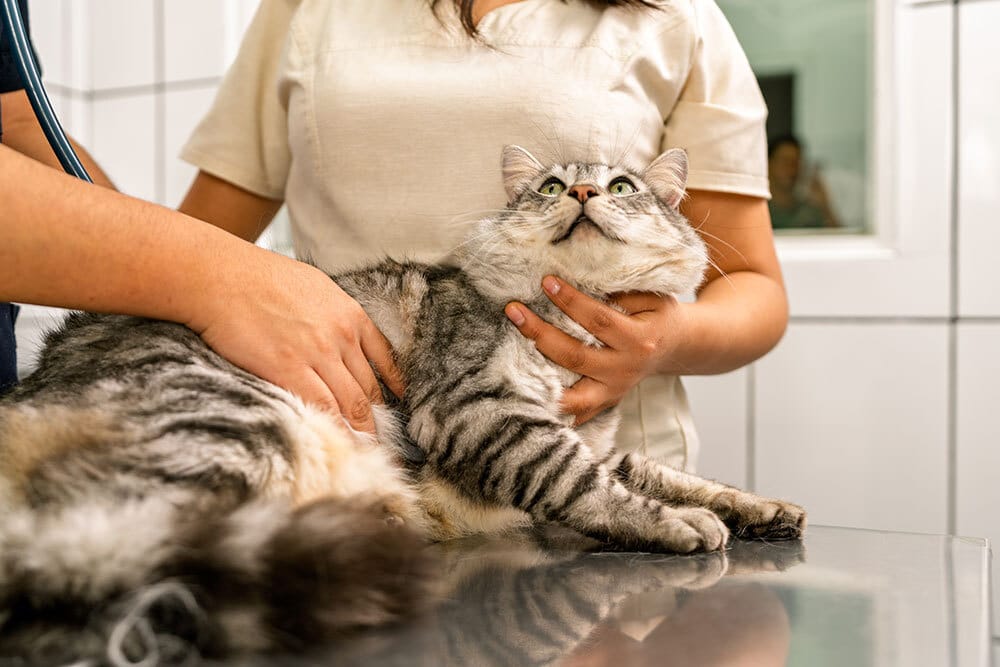
Careful palpation of all accessible lymph node groups tells us a great deal before any tests are run. Size, texture, consistency, symmetry, and whether nodes are painful or firmly attached to surrounding tissue all contribute to narrowing the list of likely causes. Painless, firm, symmetrically enlarged nodes across multiple regions point toward lymphoma or another systemic process. A single warm, tender node near a fresh wound points toward reactive inflammation from infection.
We also assess the overall picture: gum color, heart and lung sounds, body condition, and whether other organ systems show signs of involvement. At Krichel Animal Hospital, we baby your babies, and that means looking at the whole pet, not just the specific finding that brought you in.
Fine-Needle Aspiration
Fine-needle aspiration (FNA) is typically the first diagnostic step once the exam points us in a direction. A small needle collects a cellular sample from the node for microscopic evaluation. The procedure is fast, minimally invasive, and rarely requires sedation. For many cases, cytology from FNA answers the central question: are these cells reactive (responding to infection), inflammatory, or cancerous?
When FNA results are inconclusive or when specific tumor typing is needed, core needle biopsy or surgical biopsy provides the additional tissue detail necessary for a definitive answer. The choice between cytology vs biopsy is made based on what the initial sample shows and what clinical question still needs answering.
Supporting Tests
A complete blood count and chemistry panel screen for systemic infection, anemia, organ involvement, and metabolic changes. Chest radiographs and abdominal ultrasound assess internal lymph node involvement and organ changes that palpation cannot detect. When lymphoma is a serious concern, these imaging tests are part of formal staging that helps guide treatment recommendations and prognosis discussions.
What Treatment Looks Like
Treatment for lymphadenopathy is always specific to the confirmed cause.
Infectious Causes
Bacterial infections are treated with targeted antibiotics, alongside wound care or dental treatment when a local source is identified. Fungal infections require extended antifungal therapy. In either case, treating the source matters as much as the systemic treatment.
Tick-Borne Disease
Tick-borne illness requires specific antimicrobials based on which organism is confirmed by testing. Doxycycline is the most common choice for the tick-borne pathogens active in Iowa, and most dogs respond well when treatment begins promptly.
Lymphoma
Chemotherapy protocols are tailored to the subtype confirmed by biopsy and additional testing. The goal is remission rather than cure for most patients, and many dogs achieve meaningful additional time with good quality of life during treatment. The conversation about what that looks like for your specific pet is one we have directly and with complete honesty.
Reactive Lymphadenopathy
When the swelling is secondary to a self-limiting infection, nodes typically return to normal size once the underlying infection resolves. We confirm resolution with follow-up evaluation rather than assuming improvement.
What Urgency Looks Like
Not all lymph node swelling carries the same urgency. Here is a practical guide:
Come in the same day or call right away:
- Sudden swelling that developed over hours, particularly across multiple regions
- Any lymph node swelling accompanied by pale gums, labored breathing, or collapse
- Swelling near the throat that appears to affect swallowing or breathing
Schedule within the next few days:
- A newly discovered firm lump at a lymph node location
- Gradual, progressive swelling without other acute symptoms
- A node a previous veterinarian asked you to monitor that has grown
Our after-hours emergency line at (319) 318-6274 connects you with the on-call doctor for true emergencies outside regular hours.
Checking Lymph Nodes at Home
A monthly home check adds an important layer of monitoring between veterinary visits:
- Slide your fingers beneath each side of the jaw to check the mandibular nodes
- Press gently in front of each shoulder, just ahead of the shoulder blade, for the prescapular nodes
- Feel softly into the armpits and groin on both sides
- Run your hand behind each knee to find the popliteal nodes
You do not need to know exact sizes, just change. If something feels larger, firmer, or newly apparent compared to last month, call us rather than waiting.
Frequently Asked Questions
Can a swollen lymph node turn out to be nothing serious?
Sometimes, yes. Nodes that react to a minor local infection often return to normal as the infection clears. That said, lymph node changes that persist beyond two to three weeks, keep growing, or come with other symptoms are worth a closer look rather than continued watching at home.
My pet seems completely fine. Do I really need to come in?
Yes, and this is especially true for dogs. One of the things that makes lymphoma important to catch early is that dogs often show no other symptoms in the early stages. Significant node swelling and normal, happy behavior can coexist, which is why we always want to evaluate new lumps regardless of how well your pet appears to be doing.
Is the workup painful for my pet?
Fine-needle aspiration is typically well-tolerated without sedation- it feels a bit like a vaccination. Blood draws are brief and routine. We use the same gentle, caring approach with every patient because they deserve no less.
A Lump Found Is a Question Worth Answering
Finding a lump on your pet and not knowing what it means is stressful. At Krichel Animal Hospital, we believe families deserve clear information and a team that treats their concern seriously. Your pet means everything to you, and that means everything to us.
Request an appointment or contact us to have a new lump or lymph node change evaluated. We’ll walk through what we find and what it means, step by step.

Leave A Comment